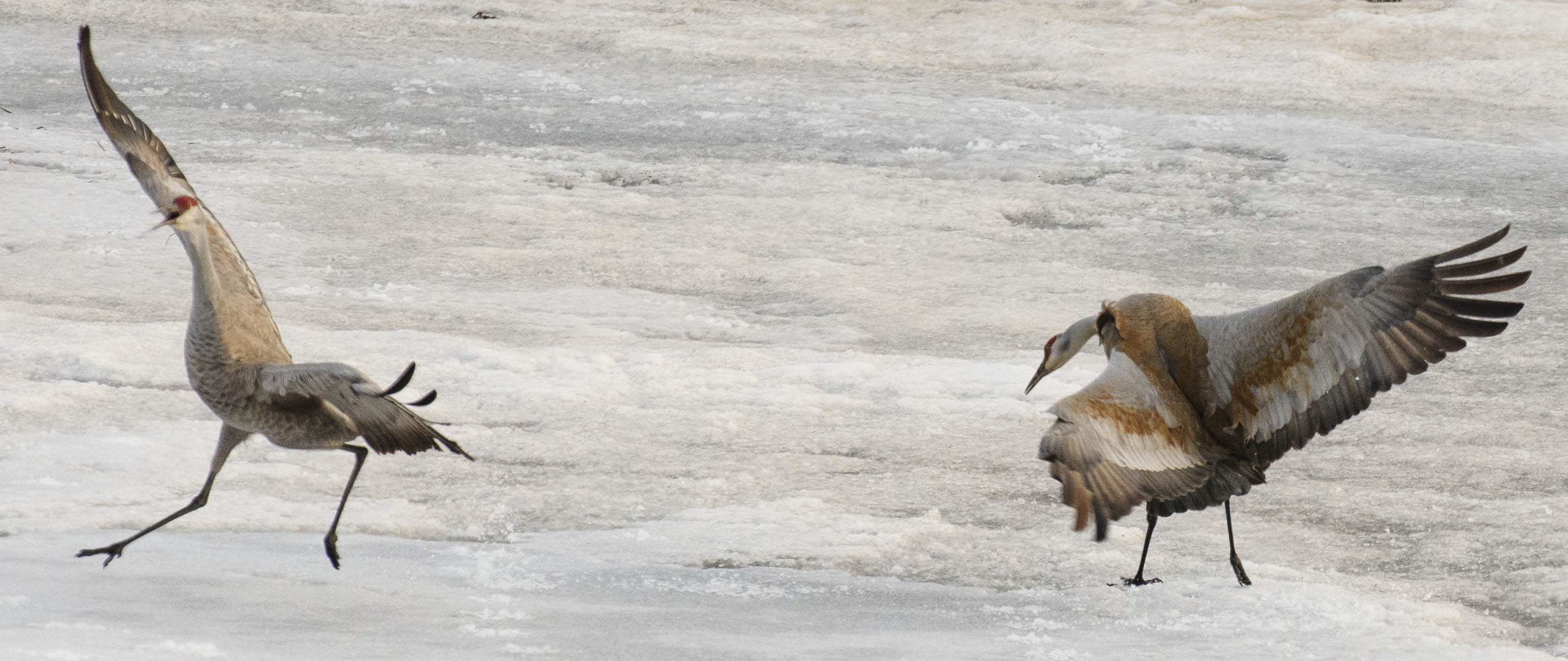
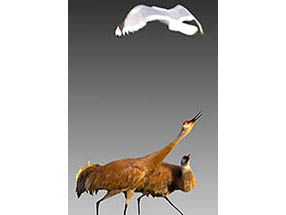
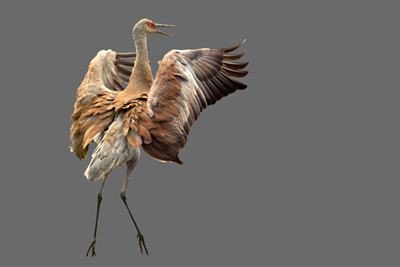
Cranes are large birds and can be formidable adversaries when they are aroused. Their leaps, jumps, body slams, and bill stabs are spectacular and effective against predators and against other cranes competing for nest territories, food sources, or mates.
But usually, cranes in conflict don't savage one another. In fact, cranes are quite social: migrating, foraging, and roosting in flocks. Within such aggregations, body language maintains personal space and establishes dominance.
The displays depicted below are signals of conflict. As cranes become stressed, other social or dance displays (like Gapes, Run-flaps, and Jump-rakes) can be employed as threats.
For some representative scientific papers describing crane displays, see Masatomi & Kitagawa, Voss and Ellis & coworkers.
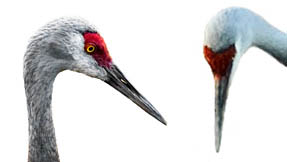
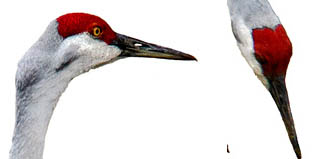
Display: The skin of the crown (forehead) is reddish and coated with tiny sparse black feathers that are barely visible. When the crane is calm and relaxed, the forehead is small and the red skin ends just behind the eye.
Function: Contracted crown indicates the crane is relaxed and not stressed.
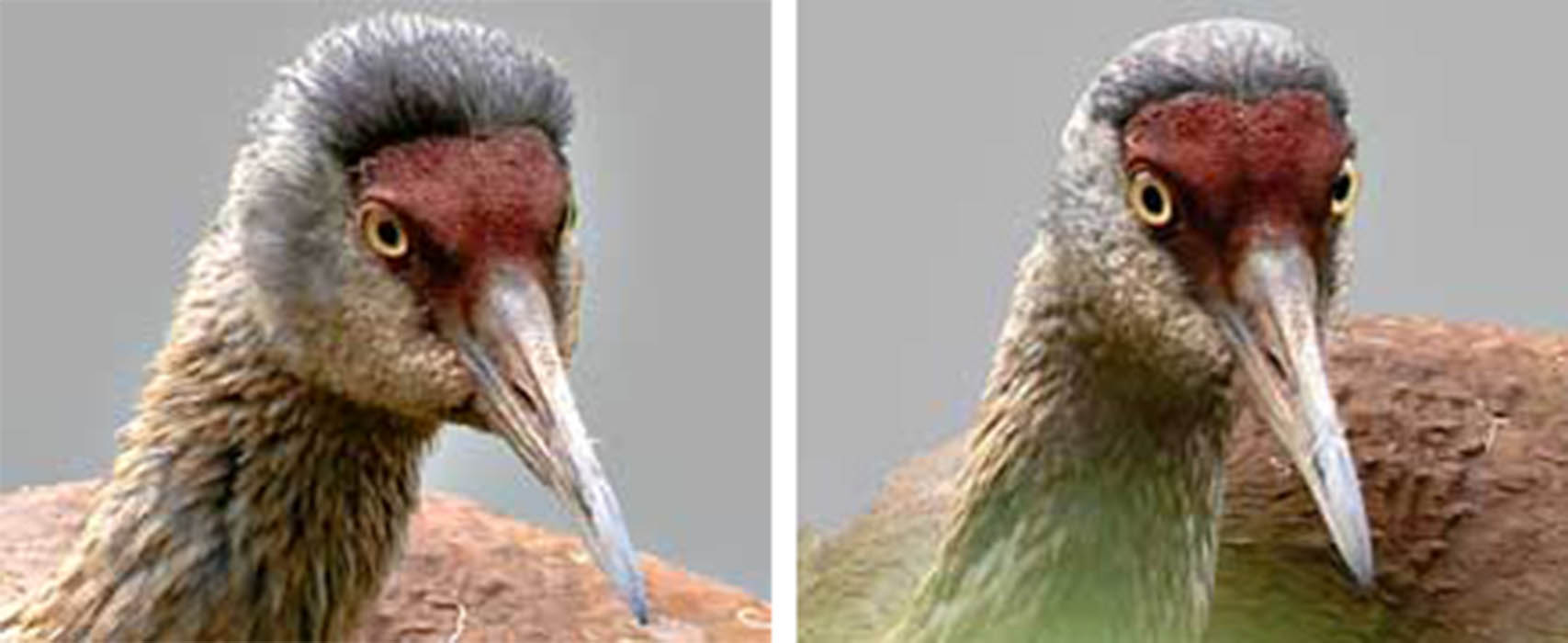
Display: When the crane is relaxed, the feathers on the top of the head (behind the bare red skin) and those on neck are slightly fluffed and the crown contracted.
As the crane gradually becomes aroused, the feathers on the top of the head are sleeked.
Function: Sleeking indicates mild arousal.
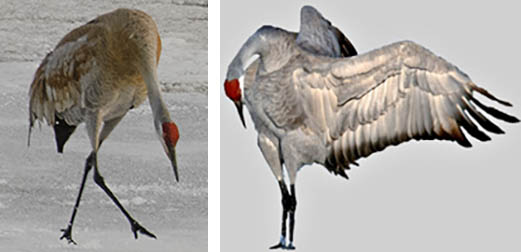
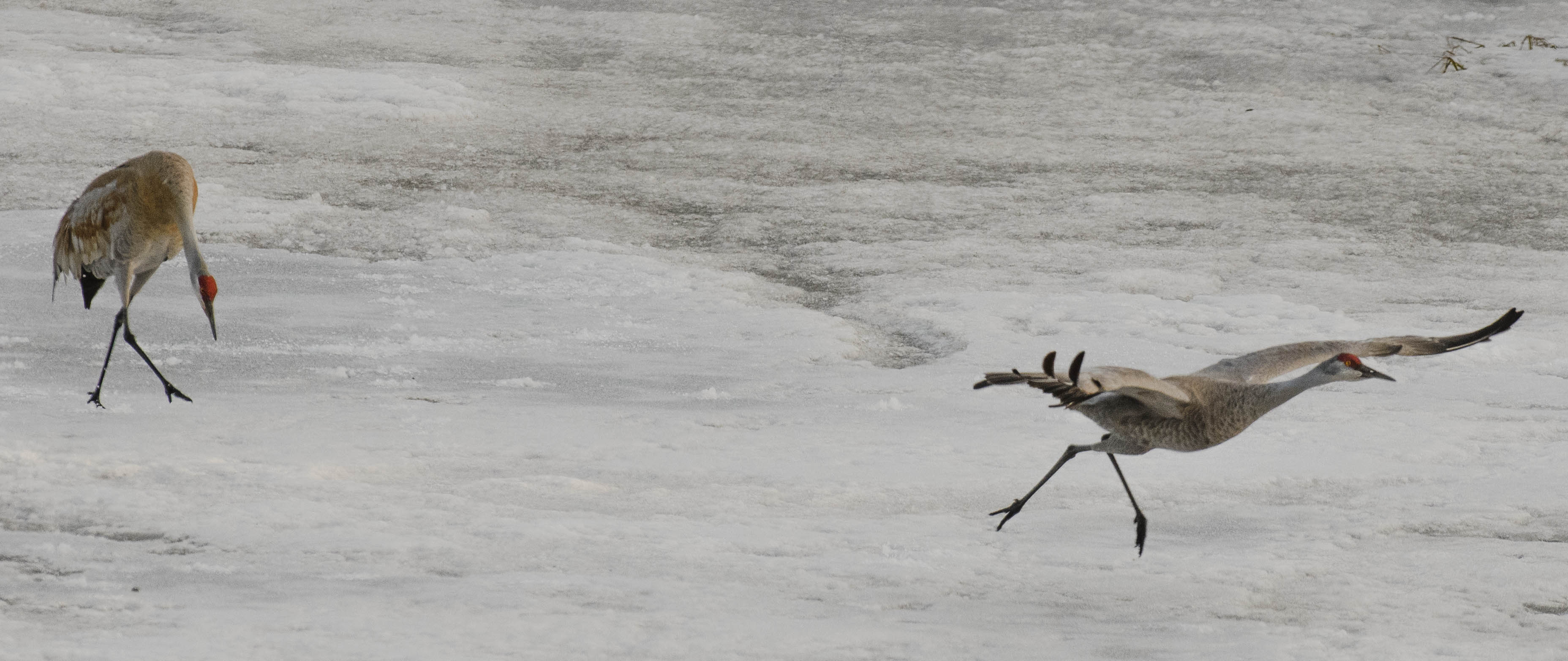
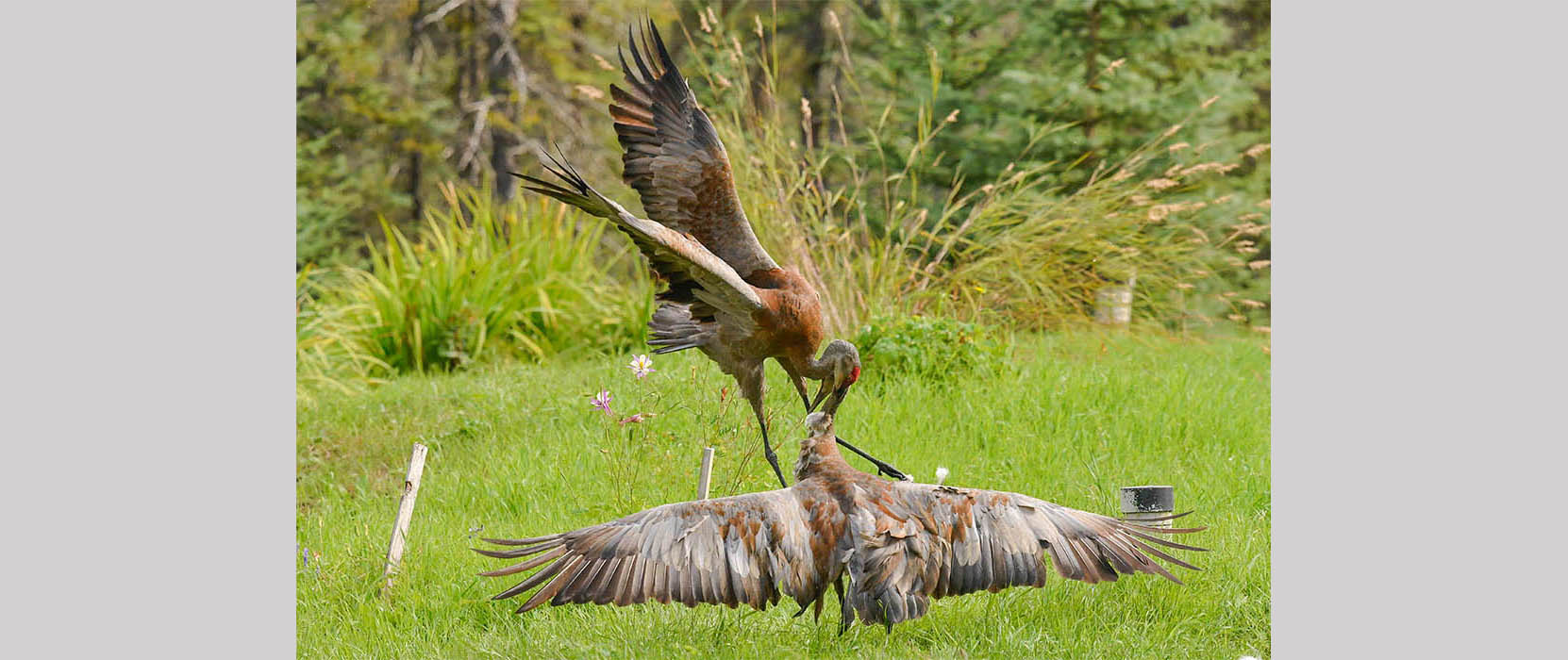
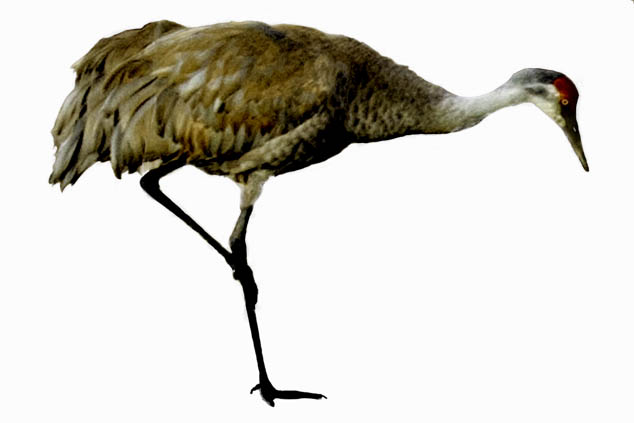
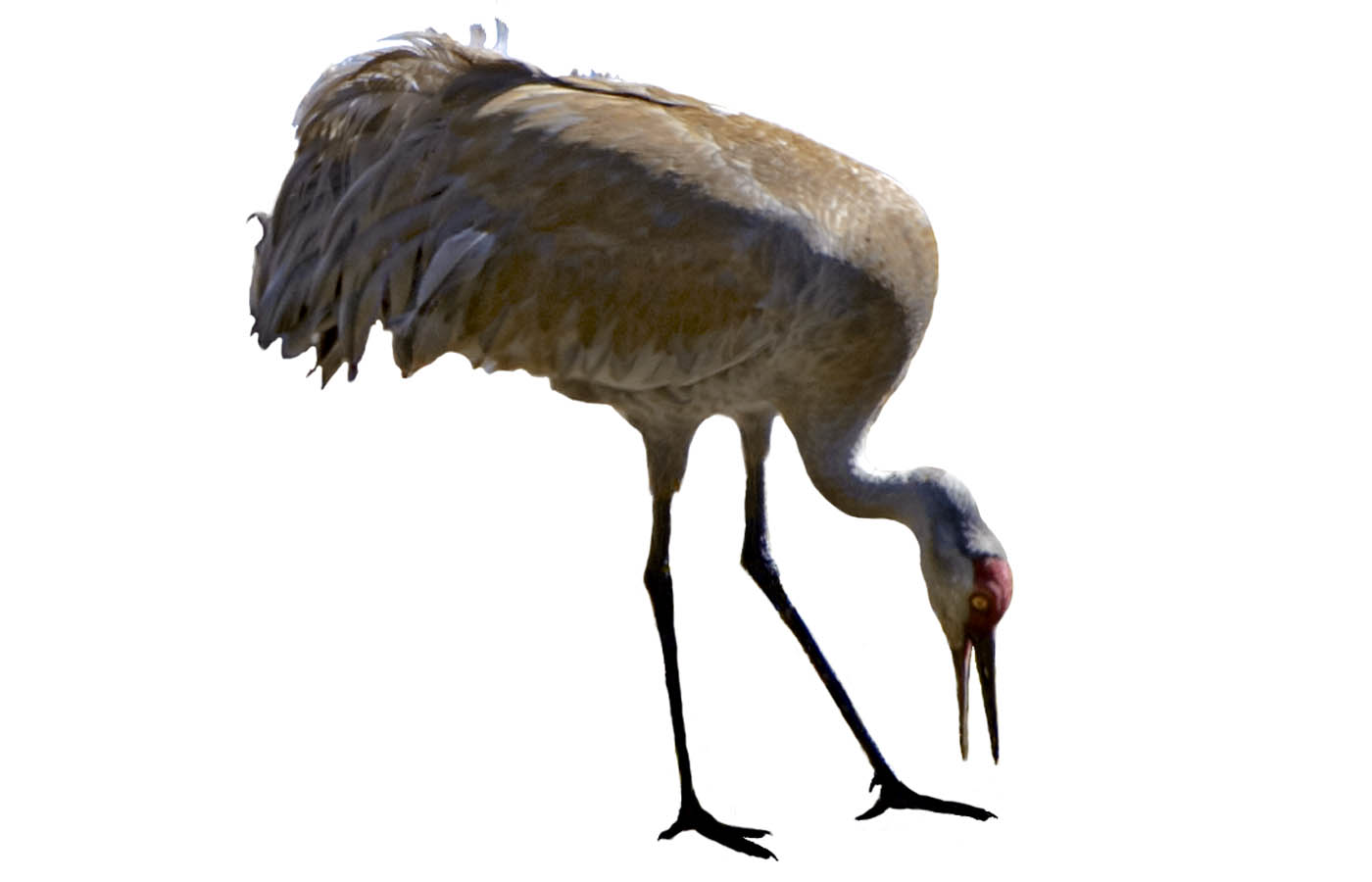
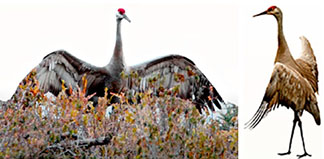
Display: Crane lowers its head, points bill sharply down and arches the neck. Wings can be held close or spread.
Function: Bowing is used during chasing (left photo shows Charging Bow) or for threat, such as when alighting in a group of cranes (right photo).
Ellis calls this display a "Hoover" because of its resemblance to an old-fashioned vacuum cleaner.
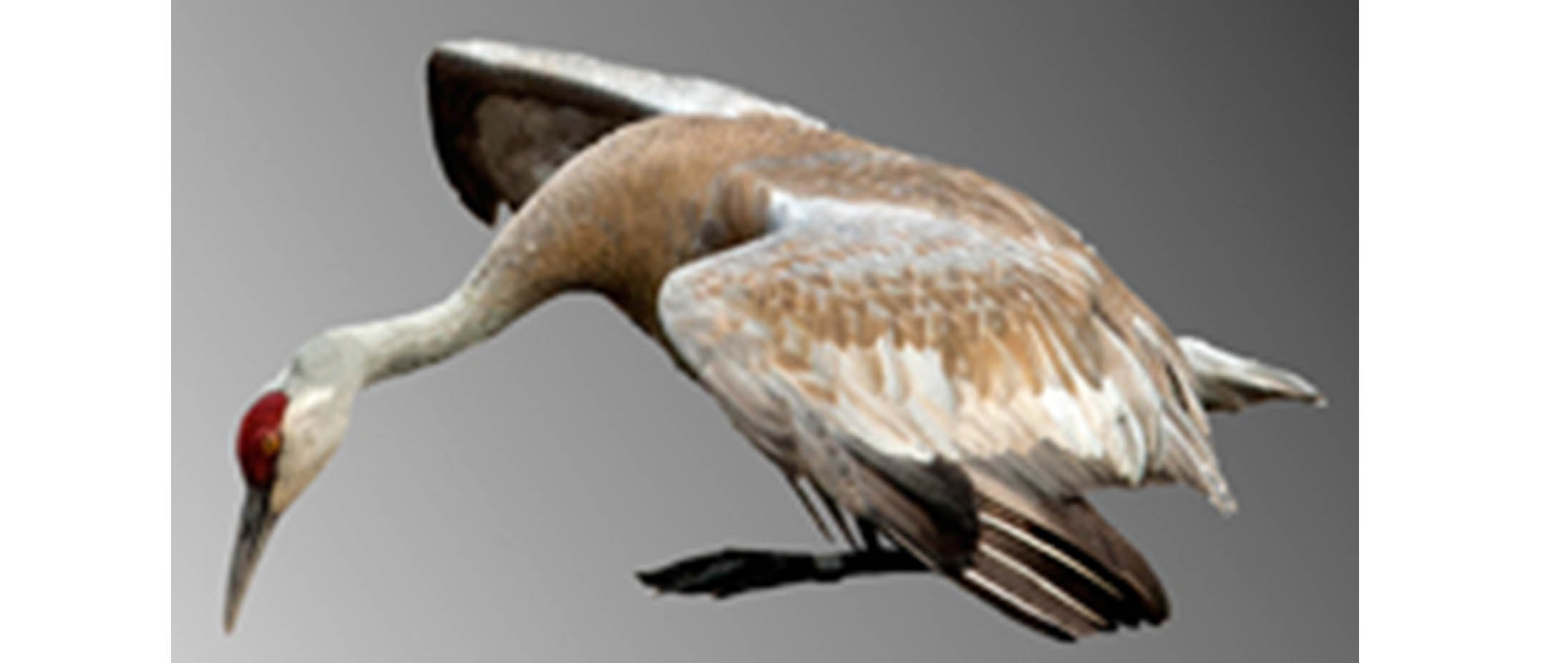
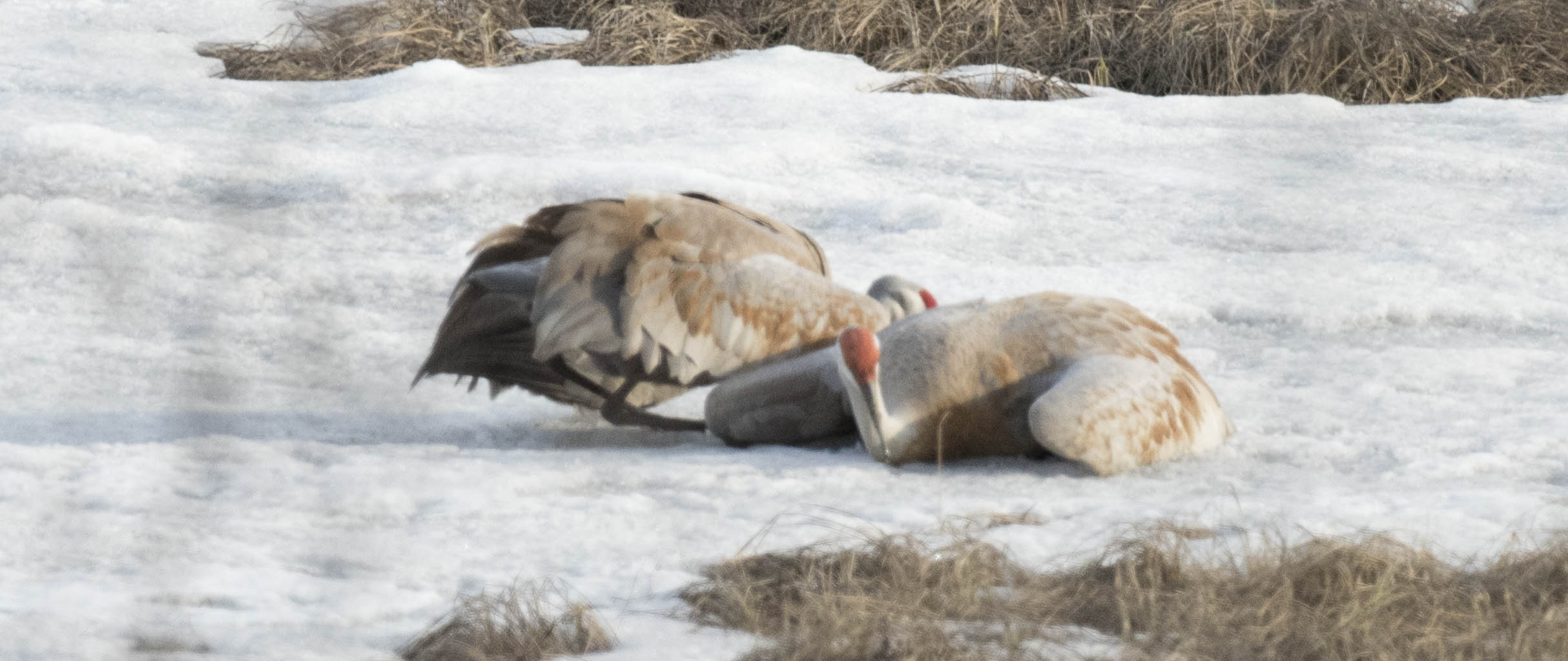
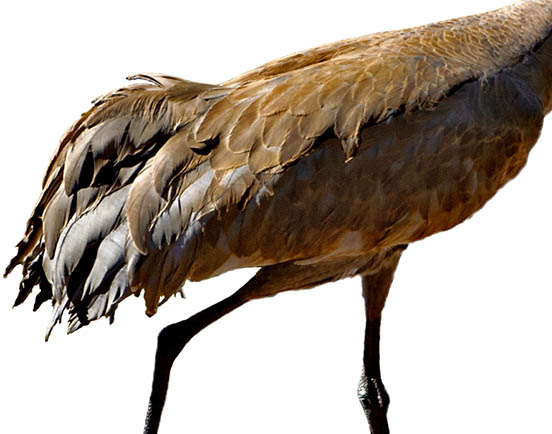
Display: The crane lowers briefly to the lie position, sleeks the neck feathers, and partially spreads drooping wings as they touch the ground.
Function: This is a rare high intensity aggressive display, usually by a female.
In video opened with the button below, two pairs are competing for a nest territory in early May.
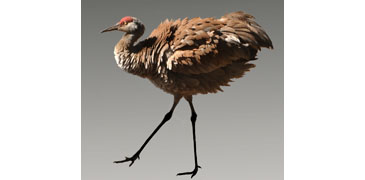
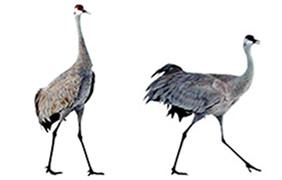
Display: Ruffling with red skin of eh crown expanded reveals arousal in threat or in dancing. Threat Ruffles often include walking with head held low, bowing, and gyrating from side to side. Some observers have reported that this display may be accompanied by a soft moan, almost inaudible in a field situation.
Function: Moderate to high intensity threat.
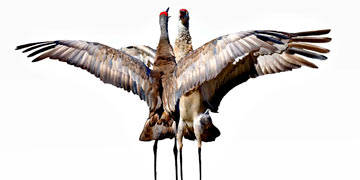
Display: Two cranes stand tall, crowns-expanded, face-to-face, vocalizing and stabbing toward each other as did these two bachelors. The display may escalate into mutual Jump-rakes, with feet tearing at the opposing crane.
Function: Bill-sparring may be used for the establishment of a dominance hierarchy in small flocks.
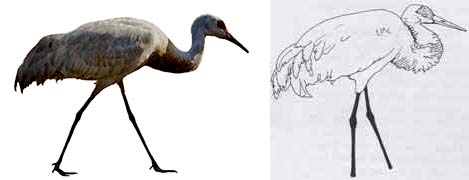 Drawing from Ellis.
Display: The crane lowers its head and retracts its neck and may stand still or walk slowly with neck curved down, head held low, and often with feathers of the head and neck fluffed. In the extreme form of Cower, the crane lowers back on its heels to a sit or lie position.
Function: Cowering is a defensive display characteristic of defeated or ill cranes.
We live on 40 acres of permafrost near Fairbanks, Alaska.
For 24 years, Christy Yuncker Happ has faithfully recorded the passing of the seasons in her written journals, still images, and videos.
George Happ is responsible for this website and the Alaska Sandhill Crane Blog.